Showing posts with label Bible. Show all posts

Saturday, 21 March 2015

Tyndale's New Testament

Wordsworth, the publishers, have reprinted many of the old "Classics of World Literature". Spiritual gems include Bunyan's Pilgrim's Progress along with William Tyndale's New Testament. 

Tyndale was the Protestant who translated the Bible into English for the first time from the original languages. I mention him here. His translation is carried over some 90% into our Authorised Version. 

It may be safely said, without any disrespect whatsoever, that our AV translators cleaned up parts of this older translation. They did well, for example, to remove the several references to Easter as they appear in the four gospel accounts. In Matthew 26:1 (Tyndale doesn't number his verses) he has Jesus telling the disciples, "Ye know that after two days shall be Easter..." While it is debatable whether the Greek word  paschal is properly translated as "Easter" in Acts 12 and our AV men retained Tyndale's translation, as indeed did the Geneva Bible translators also. They also cleaned up Tyndale's rendering of when the Apostle John was "in the spirit" while on the bleak Isle of Patmos in Revelation 1:10. Tyndale tells us that it was "on a Sunday" while the AV rightly render the Greek text as "the Lord's Day." It is pleasing to see that the AV men rendered Matthew 1:23 as "virgin" as did the Geneva men and those responsible for the Bishop's Bible. Tyndale rendered it as "maiden" which might leave room for doubt, although there are other indications, of course, within the text that indicate her virginal purity. Thankfully, Tyndale restores the word virgin in Luke 1:27 (x2) 

This edition includes the prologues which Tyndale wrote before the epistles which he translated. They are generally short - most are but a paragraph long or are contained in one page. However, Paul's epistle to the Romans drew 20 pages of comment from Tyndale's pen. It is here that we get a glimpse into his Calvinist heart.  He tells us that chapters 9-11 deal with the doctrine of "God's predestination" (so called because of its source) and how it relates to "whether we shall believe or not believe." This is about as far away from the "I get to decide with my casting vote" stuff as you can get.   

Some, though not all, of Tyndale's annotations are included in this Wordsworth edition - those included are considered the most relevant by the editor. His note in Ephesians 5 where reference is made by Paul to Christ sanctifying and cleansing the church with the washing of water by the word relate sit to baptism. I quote: "Baptist saveth through the word; that is, through faith in the word according to the covenant made in Christ." 

The editor has also seen fit to give us a brief historical insight into Tyndale's work and includes an introduction from "William Tyndale to the Reader" and then "William Tyndale, once more, to the Reader." 

The Wordsworth edition may be said to be a cheap, economy edition which is fine by me. It sits proudly on my bookshelf and is occasionally consulted out of interest. I see it as a vital component of our Protestant heritage.


* weecalvin1509 (photograph)
* CALVINIST INDEX
* PROTESTANT INDEX
* CH SPURGEON INDEX
* EVANGELISM INDEX
* HERE AND THERE INDEX
* YOUTUBE VIDEO INDEX
* 3 MINUTE AUDIOBOO INDEX

Friday, 9 January 2015

Turning the tables


 And, behold, a certain lawyer stood up, and tempted him, saying, Master, what shall I do to inherit eternal life? He said unto him, What is written in the law? how readest thou? And he answering said, Thou shalt love the Lord thy God with all thy heart, and with all thy soul, and with all thy strength, and with all thy mind; and thy neighbour as thyself. And he said unto him, Thou hast answered right: this do, and thou shalt live. But he, willing to justify himself, said unto Jesus, And who is my neighbour? 
(Luke 10:25-29) 
I spoke on this passage recently in our local Christian school assembly. Usually we see this passage as the lead in to the parable of the Good Samaritan. (Which after the points made below, we did.) However, let us not miss something here which shows how our Lord Jesus was an expert in His use of the sword of God's word. It was said of Apollos that he was mighty in the scriptures, yet it is evident that he had some deficiencies, because Aquila and Priscilla when they heard him speak, took him unto them, and expounded unto him the way of God more perfectly. (Acts 18:25-26) Our Lord Jesus never suffered from such deficiencies. Even as a young boy in the temple, He questioned the Rabbinical doctors and all that heard him were astonished at his understanding and answers. (Luke 2:47) 
In the passage above, a certain lawyer came to tempt the Lord Jesus. The various commentators are divided on whether this man had an evil motive in mind. I think he had. If so, it is significant that, having come to attack, his supposed victim's (Christ's) use of the sword backed this lawyer into the place whereby he then sought to justify (i.e. defend) himself. How did Christ do this?

(1) The attacker based his question on the word of God. Eternal life is a spiritual matter. Christ merely took the sword out of the hand of the attacker and used it himself. Did not the lesser David behead Goliath in a similar manner?
(2) Having referred to the law of God, Christ pushed the issue further: How readest thou? Man seldom does well when he is brought to the mirror of God's law. Paul tells us his experience in the early part of Romans 7. Sin came (i.e. to light) and he died. Somewhat painfully, he discovered that he wasn't the great fellow he once thought he was i.e. alive without the sin once (Romans 7:7).   
(3) The lawyer quoted the second part of the main summary of the law i.e. love God with all your heart etc., and your neighbour as yourself. This sounded good and so Christ pushed the boat out a little further - "This do and thou shalt live." 

Oh dear, the attack against Christ wasn't going too well, was it? The attacker has got his answer, but still feels exposed. So willing to justify himself, he asks, "Who is my neighbour?" thus leading to the parable, as said.
It is good to be expert in the word of God. In this regard, our Saviour is the best example. I think Christ dealt somewhat differently with this man than He did with others. There is no indication that (say) Nicodemus came to tempt Christ. Although he too had to suffer a little rebuke ("Art thou a master of Israel and knowest not these things?") as did the Samaritan woman ("Ye worship ye know not what") yet they did not hang (as it were) on their own rope. 

I do not believe that God calls us to be gunslingers, but he does call us to be discern when and if we are queried about the Scriptures. Here is an example of an attacker (assuming it is so) being driven back by his own weapons. It is significant that we go from this incident to the home of Mary and Martha. Perhaps (again) not the altogether serene place because of Martha's little tantrum, but (nevertheless) we come to the lovely person of Mary who sat at the Saviour's feet and drank in the word of God. My guess is that she too must have been mighty in the Scriptures.
Just a few thoughts along the road...

 * CALVINIST INDEX
* PROTESTANT INDEX
* CH SPURGEON INDEX
* EVANGELISM INDEX
* HERE AND THERE INDEX
* YOUTUBE VIDEO INDEX
* 3 MINUTE AUDIOBOO INDEX

Friday, 19 September 2014

Bible Signing

Signing some Bibles for the National Church Growth Conference! Great men of God!
I was first requested to sign someone's Bible somewhere around late 1983 while a newly enrolled Bible student. A wee lad asked me to sign his Bible while I was shaking hands with the worshippers leaving the Lord's morning meeting. I duly signed my name. Noticing that others who had signed their name also added a Bible verse, I wrote Psalm 37:37 under my signature. This was the text I had just attempted to preach upon that morning. Up to then, I had never seen or even heard of people signing Bibles and so I was somewhat surprised to be asked. Since then, if I have signed my name on a Bible flyleaf about half a dozen times, then that is about the height of it. And no one has asked me in about the last five years. 

Ever learning, it was only when I came to Twitter that I discovered that some take great offence at this practice. And I mean great offence. The argument runs that only the author should sign the book. In which case, that unless you can persuade the Almighty, or somehow get hold of Moses and the prophets etc., then it ain't going to happen.

Any time I have signed someone's Bible, it has never once crossed my mind that this could be seen as hijacking God's word. Rather, I saw it as me endorsing its contents. Much the same way as Paul referred to the gospel of the grace of God as "my gospel" on three different occasions. No one thinks that Paul had concocted these doctrines in his own head and was now committing them to print. I certainly would not sign my name on the Koran or the Book of Mormon in that fashion. 

If asked to sign another Bible (especially if by a five year old) I would oblige the asker. The last thing I want is a bewildered child who has just started primary school in tears after a morning service! But if no one asks, I would not be miffed in the least. I am truly indifferent. 

That said, only a certain brand of American Fundamentalism could take the whole thing to a new level. Why wait to be asked? Why merely indulge the cute hobby of five to nine year old children (No one over that age has ever asked me to sign) when you can ratchet this matter up and use it to promote your own standing in the preaching circuit? Especially when you can advertise it in the promotion stuff?  Why not take the initiative and give everyone who comes along and pays their entrance fee a signed Bible with your name on it without them even asking?  And so you get the photograph above.

This photograph makes a statement, especially when it makes it on to Twitter, contains the names of the Bible signers, proclaims them as "Great men of God" and one of them actually RT's it. It appears that the signer in these circumstances anticipates being asked, expects to be asked and indeed makes provision in that dread scenario of not being asked at all. If you pay your money to come, then you get a Bible autographed by those who are effectively proclaiming their own greatness. Of course, you could always refuse the Bible or return it, but you have paid your money for it and why should you? 

So, IMO, wait until you are asked to sign a child's Bible. Only do it because you are asked. But don't do it as part of a self promotion strategy because your notions extend to the belief that you are a giant within Fundamentalism. You are there to serve the Bible. Having the Bible serve you makes your signature worthless. 

Just a few thoughts...


Monday, 14 July 2014

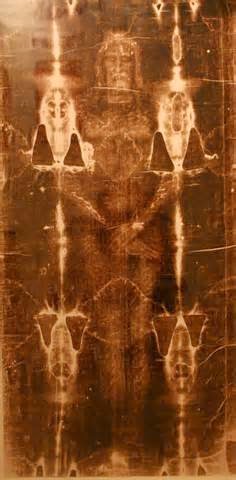
Turin Shroud

THE TURIN SHROUD IS IT GENUINE? IS IT RELEVANT? A BIBLICAL RESPONSE

Called one of the most venerated relics in the Catholic Church, the Turin Shroud is believed by many to be the burial sheet which wrapped the body of the Lord Jesus. The Shroud measures 14 feet 3 inches long and is 3 feet 7 inches wide. It bears the double image, cast like a shadow, of a powerfully built man with a beard and long hair, laid out in death. It was photographed for the first time in May 1898 and the negative image showed the horrific injuries of a man who died from crucifixion.  Bloodstains appear on the neck, wrist, feet and chest. On the rare occasions when it is displayed some 50,000 people queue each day for short time the Shroud is on display. Often their time of viewing is limited  to a mere two minutes before being required to move on.
 IS IT GENUINE?

Carbon dating dated the Shroud back only to around 1300 AD but experts warned then that fire and water damage suffered by the Shroud could affect the accuracy of the test. Besides carbon dating enjoys a greater press than it really should as it has proved notoriously wrong in the past. One scientist admitted that if carbon dating supported your theory it was quoted in the text of your report, if it was not all that far out, it was relegated to a foot note and if it was distant from what you wanted, you omitted it altogether! We should not let carbon dating influence our thoughts on this matter.  It is interesting that whilst the Catholic Church has not formally made any claims, yet 3 Popes have pontifically sanctioned the cult of the Holy Shroud of Turin. Cardinal Giovanni Saldarini announced that any priest visiting the relic will be able to absolve any woman in the city from the sin of abortion - an act only reserved for the Pope, a local bishop or any one authorised by the bishop. It would therefore appear that the Church accepts the authenticity of the Shroud. Certainly if it is not genuine, being either a genuine mistake or an elaborate hoax, then  we must wonder at the legitimacy of the  various spin-offs associated with it. What, for instance, if this was the burial sheet that covered the body of that unrepentant thief who died cursing Christ? It is highly unlikely that it was, for the bodies of criminals were usually taken down from the cross and burned. But if, somehow, this was his sheet, then what power could it have? Also, when Jerusalem was overthrown in  70 AD , there were so many Jews crucified that they ran out of trees - what if this winding sheet belonged to an unbelieving Jew? Furthermore, even if it is the genuine article, on what basis can it give any man power or authority to forgive sin? “Who can forgive sin, but God only?” (Mark 2:7) But whatever interesting side issues crop up, we have a right to enquire: Is this Shroud the authentic burying sheet of the Lord Jesus?

WHAT SAITH THE SCRIPTURE?

Matthew 27:58 He went to Pilate, and begged the body of Jesus. Then Pilate commanded the body to be delivered. 59 And when Joseph had taken the body, he wrapped it in a clean linen cloth, 60 And laid it in his own new tomb, which he had hewn out in the rock: and he rolled a great stone to the door of the sepulchre, and departed.
SUMMARY: Matthew records that there was one clean linen cloth.

Mark 15:44 And Pilate marvelled if he were already dead: and calling unto him the centurion, he asked him whether he had been any while dead. 45 And when he knew it of the centurion, he gave the body to Joseph. 46 And he bought fine linen, and took him down, and wrapped him in the linen, and laid him in a sepulchre which was hewn out of a rock, and rolled a stone unto the door of the sepulchre.
SUMMARY: Mark simply records that Jesus was wrapped in linen. His account is more ambiguous than that of Matthew.

Luke 23:52 This man went unto Pilate, and begged the body of Jesus. 53 And he took it down, and wrapped it in linen, and laid it in a sepulchre that was hewn in stone, wherein never man before was laid.
SUMMARY: Luke follows Marks account. Very simply - wrapped in linen.

John 19:38 And after this Joseph of Arimathaea, being a disciple of Jesus, but secretly for fear of the Jews, besought Pilate that he might take away the body of Jesus: and Pilate gave him leave. He came therefore, and took the body of Jesus. 39 And there came also Nicodemus, which at the first came to Jesus by night, and brought a mixture of myrrh and aloes, about an hundred pound weight. 40 Then took they the body of Jesus, and wound it in linen clothes with the spices, as the manner of the Jews is to bury.
 
John 20:2 Then she runneth, and cometh to Simon Peter, and to the other disciple, whom Jesus loved, and saith unto them, They have taken away the LORD out of the sepulchre, and we know not where they have laid him. 3 Peter therefore went forth, and that other disciple, and came to the sepulchre. 4 So they ran both together: and the other disciple did outrun Peter, and came first to the sepulchre. 5 And he stooping down, and looking in, saw the linen clothes lying; yet went he not in. 6 Then cometh Simon Peter following him, and went into the sepulchre, and seeth the linen clothes lie, 7 And the napkin, that was about his head, not lying with the linen clothes, but wrapped together in a place by itself. 8 Then went in also that other disciple, which came first to the sepulchre, and he saw, and believed.
 
SUMMARY: Out of the four evangelists, John gives us the fullest account. John twice tells us that the body of Jesus was wound in linen clothes - (plural) and also that a napkin or handkerchief was used to bind Christ's head. This handkerchief was separate from the linen clothes and wrapped in a place by itself. It was usual for the Jews to bind the head of the corpse with a napkin. It had been this way with Lazarus of Bethany whom the Lord Jesus raised again from the dead:

John 11: 44 And he that was dead came forth, bound hand and foot with grave clothes: and his face was bound about with a napkin. Jesus saith unto them, Loose him, and let him go.

Note again the plural in the grave clothes for Lazarus, but especially the face bound with the napkin.

If the gospel writers contradict each other, then the whole gospel is a sham. In such a case of apparent contradictions, we look to see if we can reconcile the passages together. We have already seen how both Mark and Luke are very ambiguous in their account. They do not tell us anything about the number of cloths used - only the material. Matthew states that a linen cloth was used, but importantly, he does not say that only one linen cloth was used. John tells us twice over that Jesus was bound in linen clothes. Where you have two (or more) of something, you must by necessity have one of it also.  Without contradicting any of the others, John gives us the fullest account and says quite clearly that more than one cloth was used to bind the body of the Lord Jesus.

Since this is so, it is hard to see how the single sheet on display at Turin, bearing the full imprint of a crucified man could be authentic. Of course, there are many questions to which answers would be interesting. Why was the sheet kept in the first place? Does it survival of two major fires mean anything? [The relic was almost destroyed by fire in 1532. The silver casket housing the Shroud melted in the intense heat and burned holes right through the folded cloth. Twenty four patches were required to repair the most damaged areas, but amazingly the image itself was not touched.] All sorts of claims are made concerning the Shroud - but when all is said and done, there is a major obstacle in reconciling its claim to fame with the infallible word of God. Do we seek to silence God because His word stands in the way of popular opinion? Is it not better that popular opinion be dictated to by the word of God. It was the wise course of the Psalmist David to test all things by the word of God:

Psalm 119:128 Therefore I esteem all thy precepts concerning all things to be right; and I hate every false way.

SUPPOSE THERE IS AN ANSWER…

What if there is an answer that can reconcile this single sheet in Turin with what God has written in His word  - what then? This leads us on to the second question: IS IT RELEVANT? Let us suppose that the Shroud of Turin really was the very burying sheet. What do we do?

It is at questions like these, that we ought to thank God that He has given us the Book that is for many of us the sole rule of faith and practice. When others are “tossed to and fro and carried about with every wind of doctrine…” (Ephesians 4:14) we have something solid that will survive every storm. Since “there is no new thing under the sun” (Ecclesiastes 1:9) the Bible has this situation covered. All that changes are a few local details, but there is nothing new in the people being faced with a relic on display. Please read on…

ANOTHER LOOK AT THE SCRIPTURES…

If you are interested in antiquity, consider that the passage below was written approximately 550 years before the Shroud of Turin  came into existence and speaks of an event  which occurred some 350 years before that again.  I speak of King Hezekiah and the serpent of brass. 2 Kings 18:1-7 reads as follows:

2 Kings 18:1 Now it came to pass in the third year of Hoshea son of Elah king of Israel, that Hezekiah the son of Ahaz king of Judah began to reign. 2 Twenty and five years old was he when he began to reign; and he reigned twenty and nine years in Jerusalem. His mother’s name also was Abi, the daughter of Zachariah. 3 And he did that which was right in the sight of the LORD, according to all that David his father did. 4 He removed the high places, and brake the images, and cut down the groves, and brake in pieces the brasen serpent that Moses had made: for unto those days the children of Israel did burn incense to it: and he called it Nehushtan. 5 He trusted in the LORD God of Israel; so that after him was none like him among all the kings of Judah, nor any that were before him. 6 For he clave to the LORD, and departed not from following him, but kept his commandments, which the LORD commanded Moses. 7 And the LORD was with him; and he prospered whithersoever he went forth: and he rebelled against the king of Assyria, and served him not.

1) THERE WAS NO DOUBT OF THE AUTHENTICITY OF HEZEKIAH’S RELIC:

The inspired writer makes this clear. It was the brazen serpent which Moses had made (v4) It was not merely based on tradition or legend. The connection with the Shroud of Turin  can be clearly seen, although the case for the serpent is stronger again. However this enables us to argue from the greater to the lesser.

2) HEZEKIAH’S RELIC HAD A MOST GLORIOUS HISTORY:

It’s story is told in Numbers 21:4-9 where (to summarise) it was used by God to heal those who gazed upon it after been bitten by the serpents. The glory of the serpent lay far deeper however than a mere physical healing. It’s relevance is heightened by the fact that the Lord Jesus referred to it in John 3:14-15:

And as Moses lifted up the serpent in the wilderness, even so must the Son of man be lifted up: That whosoever believeth in him should not perish, but have eternal life.

Hezekiah’s relic had been used as a type of Christ. God had used it to teach the truth that those who look to Christ are saved. Just as Moses lifted it up in the wilderness, so too Christ would be lifted up on a Cross and all who looked in faith to Him would be pardoned and forgiven. They were not to try and save themselves from the serpent’s sting. They were not to look to one another, or even to Moses. They were commanded to look in faith to the serpent on the pole and any man when he beheld the serpent of brass, he lived.  Likewise the Lord Jesus can say: Isaiah 45:22 Look unto me, and be ye saved, all the ends of the earth: for I am God, and there is none else.

This is the only way of salvation. We made mention earlier on to one of the thieves who died on the Cross beside Jesus. He was saved at the last moment. That very day, Jesus said, he would be in paradise. How was he saved? By looking to Christ. He was not saved by good works, since his hands were nailed to a Roman Cross and he could do no good work. He was not saved by any church sacrament, for there is no mention of any in the gospel record. With all due respects to the Blessed Virgin, the thief does not seem to notice her at all even although she is standing within earshot. He was saved by simply looking in faith to the Lord Jesus. As it was for him, so too with us. As Isaiah makes clear in the quotation above, this is a message for all men - the ends of the earth. Those who look in simple faith and repentance to Christ are saved for eternity!

The Turin Shroud cannot claim a history like this. If indeed it is the genuine thing, it has a story to tell. It is but another evidence for what we read in the Bible. But the “faith of God's elect” (Titus 1:1) does not stand on the availability of relics.  Perhaps many such relics were in abundance during the days of the apostles.  Yet when Peter gave the grounds by which the gospel was preached, he did not link it to a few relics, but to “the word of the Lord (Bible) which endureth for ever.” (1 Peter 1:24-25) Not a few relics have been found to be false. To put unswerving faith in a relic is to build upon a foundation of sand. But Hezekiah’s relic had a glorious history indeed.

3) DESPITE ALL THESE THINGS, RELIGIOUS REVERENCE OF THIS RELIC WAS NOT CONSIDERED GOOD:

It is worth noting that the people of Hezekiah’s day showed great interest in this relic. It did not suffer the indignity of apathy. Very few said “So what?” People cared greatly Moses had once used this very relic to deliver the people during the wilderness years of the nation. They recognised its great significance.

However, they went to the other extreme. They paid it homage. They “did burn incense unto it” Perhaps someone here asks the obvious: Can we not revere something without actually worshipping it? Such distinction often exists only on paper and not in reality. Augustine said:

“No man prays or worships looking on an image without being impressed with the idea that it is listening to him.” (Epistle 49)

Hezekiah saw the danger that this relic was posing. There was plenty of idolatry against which he could have taken his stand. He could have spared the serpent and smashed the rest. Certainly he  would have had he followed the argument that since this relic was encouraging the people to pray then it must be good. After all, could we not say that there was an improvement here? At least, the people were interested in a Biblical item! But Hezekiah did not swallow that one. He had an insight which very few seem to have today. He perceived that the serpent of Moses was the greatest threat to the spiritual well being of the people and therefore most worthy of his attention. He smashed it in pieces!

“That which was at first a type of the Saviour, is now a deadly engine of the enemy.  Hezekiah willingly forgets who made the serpent, when he sees the Israelites make it an idol. It is no less tolerable for God to have a rival of His own making.” (Joseph Hall)

He did not engage in half measures. This relic was not merely withdrawn from public view. Perhaps like the Shroud of Turin , such would only increase its aura and mystique. He did not merely break it in two with an eye to future repairs when the climate would be more suitable. No, he “brake it in pieces” - he reduced it to a pile of rubble. It was final. To “add insult to injury” he gave it a name of reproach. He called it “Nehustan” or “a piece of brass” or in modern language: “Scrap metal!” Supposing you were to go to Turin with insight that the famous Shroud was indeed the very winding sheet of the Lord Jesus. Supposing you were to rip it up into a thousand pieces and call it a “mere cloth” or “an old rag”  - what do you think would happen? Do you think that you be hailed as a hero? Would you not be regarded as an unspeakable villain?

4) GOD'S BLESSING ATTENDED WHEN THIS RELIC WAS DESTROYED:

It is to be noted that Hezekiah is set forth in this short passage as a good man. Read the appraisal of the Holy Spirit upon his life and character. There was no divine judgement upon his head  - only divine praise. It is interesting to read that he kept the law of Moses (v6) even though he destroyed the very relic which Moses, under God, had created.

Should the Shroud of Turin  be destroyed? I am not saying that it ought to be, but I will answer that question with others: What if it was? Would it be a big loss? Furthermore, which would be the greater loss - the shroud which some openly pray to and worship (remember Augustine’s observation above) or the soul’s of those who openly flout the second commandment which clearly forbids the worshipping of any image? Jesus asked two very important questions in Mark 8:36-37:

For what shall it profit a man, if he shall gain the whole world, and lose his own soul? Or what shall a man give in exchange for his soul?

Would it not be better to destroy this relic if it kept some benighted soul out of the blackness of darkness forever? Man corrupts everything he puts his hand to. It should be possible to put  something like this on display without someone attributing powers to it. Even if it is the true shroud, what power can it give any priest to forgive (as it has been claimed and indeed promised) a woman who wilfully murders the fruit of her womb? Such teaching is void of any Scripture basis.

IN CONCLUSION:

We have tried to be neither emotive or offensive in our study on this subject. We are not asking you to agree with our opinion, but simply to accept the verdict of the Scripture which, when all is said and done, must be accepted as the sole rule of faith and practice.
 

Sunday, 9 February 2014

ussher


 IS THE EARTH 6,000 YEARS OLD? 
READ: GENESIS 5:1-32


Archbishop Ussher proposed that the earth came into being in the year 4004 BC. In some AV Bibles, you will have the date 4004 BC beside Genesis 1:1 You can thank Archbishop Ussher for this. He went further and stated the month (October) and again he went further and tacked it all down to the exact date: 23rd.

Who was Archbishop James Ussher? He was installed as the Anglican primate for Ireland in the early 17th century and a very godly man. To the horror of his fellow prelates, he was a good friend of the Scottish Covenanters and preached for Samuel Rutherford. He was a learned man and wrote on Biblical/Theological subjects. We are not talking today about the findings of a fool or a mere enthusiast.

We have 2 questions to ask and answer:
[i] Was he fundamentally right when he said that the earth is only 6,000 years old and
[ii] Does science prove him wrong?

You will notice the careful wording of the 1st question: Was he fundamentally right? I am in no position (nor have I the desire) to try and defend him in his position of tacking the whole matter down so minutely to a day or even a year. I am willing to defend him in his assertion that the earth is a relative young earth - about 6,000 years old. Secondly, where does science stand on the matter?

3 thoughts will greatly help us:


1) WHAT SAITH THE SCRIPTURES?

Ussher proposed his dates on the basis of how he interpreted the genealogies of Genesis 5/11 along with other significant dating passages (Egpytian/Babylonian captivities etc)

A/ You views on this will depend on your views of Scripture. What does the Bible mean to you? Nothing more than a book of Jewish myths? Jewish history - but only really for intellectuals? Literally classic - but not for you?

B/ Need to bear John 5:45-47 in mind. This includes Genesis and the genealogies also. Genesis forms part of 2 Timothy 3:16 We expect God to be able to tell us about the age of the earth because: Job 38:4, Genesis 1:1

C/ By working out the different details given…we see that Adam was created about 4,000 BC +2,000 years since Christ (b. 4BC) = 6,000 Scripturally: Ussher on safe ground.

2) WHAT SAITH THE SCEPTICS?
2 types of scepticism:

A/ THE RELIGIOUS SCEPTICS: 

Tell us that the Book of Genesis is full of poetry and is not to be taken literally. ANS:- Read down line by line (Note: there are over 100 lines the genealogies of Genesis 5/11) and give me a poetical interpretation that evidently overrides any thought that these genealogies were meant to convey literal births and literal deaths with literal lives lived in-between. I accept that there are difficulties in the genealogies. A wise old preacher once observed: "Chronology is a surely cur that has bitten many a man’s fingers." But they are important, for they help establish the historical testimony of Jesus Christ, and incidentally, help us understand a young earth.

B/ THE SECULAR SCEPTICS:

I call them secular because many of them are outside the Christian Church (Although their views are inside as well) but this does not mean that they have no philosophy or creed. They tell us that man was not created by special act of creation by a God who does not & could not exist, but that he evolved from primeval soup/jelly and eventually through a slow torturous process became as he is known today. All this needed time and so (they say) the earth is 4½-5 billion years old. [Note: Correct at time of going to press ;o) ] Makes 6,000 years look very young indeed. In order to uphold this view the secular sceptics look to science, and so without blinking, so will we.

3) WHAT SAITH THE SCIENTISTS?

Or more precise: What saith science? 
True science does not work on theories, but on observable facts. You may have a theory and seek to prove that theory (acceptable thing to do) but you cannot force the facts of science to bow before your theory. If you cannot reconcile them, then your theory falls to the ground. You don’t twist science.

A/ Those who believe in an ancient earth (4½ -5 billion years) do so to bolster belief in evolution. [I believe this is an attempt to deny God and justify sin] They approach science with this view in mind. Bias. They need all these years because 6,000 years is not long enough for evolution to take place.

B/  Sometimes their dating processes involves circular reasoning: We go to the rocks. The massive hills that no one can remember how/when they got there. Ancient. Explore the rocks - find the fossils. Can we not work out the dates from fossils/rocks? If we can find just 1 thing that is millions of years old - the Bible record is either wrong/hopelessly useless on this matter: Unfortunately the evolutionist needs circular reasoning: The rocks are dated by the fossils, the age of which is determined by evolution. Prove Evolution: The proof of evolution is the age of the rocks in which the fossils are found. Circular reasoning.

C/ Sometimes their different dating processes (Called radio carbon dating) gets it all radically wrong even by own standards: When the blood of a seal, freshly killed at McMurdo Sound in the Antarctic was tested by carbon-14, it showed that the seal had died 1,300 years previously. In another case, a basalt rock in Nigeria was dated at 95 million years by the potassium-argon method, whilst the uranium-helium method decreed the same rock to be 750 millions years old.

D/ In Job 12:8 God encourages us to study the earth. It is wrong to say that Bible faith and science do not mix. Many great scientists (indeed greatest scientists) were Christians/Creationists. When we do so, we find a young earth. Probably 6,000 years old. Science (with all its limitations) does not contradict it, although it contradicts the thought of billions of years old. Prof. T.L. More (Vocal Evolutionist) said: "The more one studies the fossil record the more certain one becomes that evolution is based on faith alone."

Evidence of the fossils show a sudden dramatic disaster (Flood?)
The world is running down.
Sun is shrinking - if it shrunk at the same rate it is shrinking now…you would have no sun.
Salt in the sea, many similar things.
Earth’s population: 4.5 billion which is in keeping with a period of around 5,000 years - the time when 8 people stepped off the ark.

A THOUGHT IN CLOSING:-

If Genesis is right,  then what about the thought of a personal Creator?
Adam's fall (chapter 3)
What about Exodus and the 10 Commandments?
What about Noah finding grace in God's eyes?
What about Jesus Christ?
What about your soul?

THE END

Friday, 7 February 2014

audioboo_unboundbible1

https://audioboo.fm/weecalvin


Over the next short while, along with the usual written posts, I want to post up a short series of audioboo messages based on Paul's great statment in 2 Timothy 1:12 that the word of God is not bound. Here is the introductory message. All messages are bitesize (less than 3 minutes in length) but full of truth that will hopefully encourage and even inspire the child of God. 

Broadcast #1 Introduction
Broadcast #2 Word of God is not bound by Tyranny
Broadcast #3 Word of God is not bound by Time
Broadcast #4 Word of God is not bound by Tradition
Broadcast #5 Word of God is not bound by Transgressions 
Broadcast #6 Word of God is not bound by Talents

INDEXES:

* CALVINIST INDEX
* PROTESTANT INDEX
* CH SPURGEON INDEX
* EVANGELISM INDEX
* HERE AND THERE INDEX

Saturday, 21 December 2013

principles 5

SOME POSTCARD ENGLISH SERMON NOTES 
 

A SERIES ON THE PRINCIPLES OF BIBLE INTERPRETATION: 

READ: ROMANS 8:6  SPIRITUALLY MINDED ETC.,


But to be spiritually minded is life and peace

We have looked at a number of principles which are to be applied whenever we seek to interpret the Bible.  These principles can never be violated. From time to time we might come across a difficult passage to understand. This gives rise to the temptation to take short cuts for the sake of convenience and to infringe upon these principles. Avoid! Better to admit ignorance than to be guilty of wresting the Scriptures for the sake of saving face or time/effort.

Principles already looked at: 

[i] God is always sovereign. There is no wisdom nor understanding nor counsel against the LORD. (Proverbs 20:31) Never dethrone God to make a passage read easier.
[ii] Man is always responsible. This is the other side of the coin. Man cannot blame the sovereignty/God when he sins. 
[iii] The Judge/all the earth always does right. Even in the hard cases. There are many times in the Bible when we have just to rest upon this observation and remember that no one ever got a raw deal from God. All God's ways are marked by unimpeachable justice and holiness.
[iv] The flesh never profits. Anything done in the flesh will surely lead to great loss: The arm of flesh will surely fail/We dare not trust our own.  

We want to conclude this short series - far from being exhaustive - with the observation from Romans 8:6 Spiritually minded etc.,

1) DEFINE: WHAT IT IS TO BE SPIRITUALLY MINDED:
Or: How we may discover those folk in our Bible readings who qualify for such a glorious title.

A/ A spiritually minded person has the mind of Christ. Let this mind be in you, which was also in Christ Jesus. (Philippians 2:5)
Paul claimed (under inspiration) to have it. Attainable.
It is to think as Jesus would think and do what Jesus would do.
Christ rejected the world's philosophy. Even in religious circles. "Ye have heard it said" (Tradition) but I say unto you…"  
 Bible (OT/NT)is dotted with individuals who were most Christ-like in their thinking.
Many of them actually typify the Lord Jesus. 

Christ alone could say that He did always the things which pleased the Father.
Spiritually minded people, faults notwithstanding, emulate the Saviour.
So Paul, this spiritually minded man, could say: Follow me inasmuch as I follow Christ. (1 Corinthians 11:1)

B/ A spiritual minded person has set his affections/things above. (Colossians 3:2)
Folk in Hebrews 11 lived for another world.
Declined the favour/this world. Declared that they sought another world - a heavenly i.e. a spiritual.
A spiritual man is not motivated by ambition. Cannot be bought for money/fame or influence.
Where you read of men who are ambitious, then do not think them spiritually minded.
Best seen in two men closely related:
 

[i] Lot chose the fertile plains/Sodom because his affections were earthbound. Walked by sight.
[ii] Uncle Abraham was spiritually minded. Walked by faith and readily forwent earthly advantage.
When reading/passage, we do not attribute Abraham with folly but with spirituality.
Likewise Elisha (spiritually minded) cared not for the riches of Naaman but his servant Gehazi did.

C/ Spiritual minded people are not mystics who tend to make up the rules as they go along.
Spiritual minded people are not free spirits but call themselves "bondslaves of Jesus Christ" (Romans 1:1)
They are Bible people who are happy to be led by the laws/Heaven than the lawlessness of earth. Bible abounds with such.

2) HOW A SPIRITUAL MIND CAN BE ATTAINED:
As we read of such/Bible - ought/think: "How can I be one of these people?"

A/ We can never have a spiritual mind while we are still in our sins.
Not mere religion. These folk did not embrace these things as an absorbing hobby etc.,
An intellectual knowledge/Bible is not the goal. You can have all these things and still be lost at the end.
First step to a spiritual mind leading to life/peace is to be born again/Spirit!
Until we are, we possess the carnal mind which is death (v6) and is enmity against God (v7)

B/ When we are saved, we are brought into union/Christ. Spirit/God indwells His people.
Power/sin which once reigned does so no more. 
It is as natural for us to desire spiritual things as it was once natural for us to desire carnal things.
This is the evidence/New Birth. 
Empty profession if not followed up by a desire to learn more: 2 Corinthians 5:17/Acts 2:42
Illustrate: New born babe. Who instructs it to suck the milk?
Built in mechanism. Likewise/spiritual birth. Naturally the spiritual mind has to develop.
None are born spiritual giants. But the seed is there and the seed will grow as intended by God. 

C/ Our responsibility in this matter is to: 


[i] Pray for a spiritual mind. How much more will your Heavenly Father give the Holy Spirit to them/ask. (Luke 11:13) 

[ii] We are to seek the Spirit's mind in that place where it is so often recorded i.e. in the Bible.
He that hath an ear…let him hear what the Spirit saith to the churches… 
Reading (as said) not as a mere hobby, but with a definite view of obedience. Letting go the carnal & taking on board the spiritual.
Blending our life into what we read. I thought on my ways, and turned my feet unto thy testimonies. (119:59)
Evidently becoming more spiritually minded. 

[iii] We are to often meditate and study these things, talking with spiritual people on them.
They that feared the Lord spake often one to another.
In order to do this, we really do need to clear our minds/time tables of all unnecessary junk.
Problem with the human mind is that we have all got a pretty limited memory!
Just as we have to purge our computer hard drives frequently, so likewise our thoughts.
Am I being taken up with something that is ultimately of no profit?  
Am I sacrificing spiritual gain for carnal loss? 

[iv] Exhort others to and be exhorted ourselves etc., Very seldom is this a one man show.
Often the crackpots are on their own in this matter. Don't fellowship anywhere.
Spiritual men cannot talk to them. Beyond criticism etc., This is not the sign of spirituality.
When a spiritually minded man sins (as they do) they can be restored again. 
Seen in Paul regaining Peter (Galatians 2:11)

D/ Remember this as you read your Bible. Are you reading about a man who is walking/God?
Do not think he arrived here either by nature/chance.
He was enabled to be spiritual because of the Spirit/God in him.
Under God, he worked at attaining this position.
Made hard choices. Forwent earthly advantages.
Never interpret a passage that ignores these observations.

3) THE FRUITS OF SUCH A SPIRITUAL MIND:
life/peace Evidently in complete opposition of death/enmity (v6/7)

A/ Has such with God. Mentioned Colossians 3 (affections/above)
For ye are dead, & your life is hid with Christ in God. (v3)
Has peace with God. Been truly/fully reconciled.
Nothing to hinder the blessing. God is not compromising in blessing him. Eden revisited.

B/ Has such with himself.
Spiritual minded Paul: Paul, earnestly beholding the council, said, Men & brethren, I have lived in all good conscience before God until this day. (Acts 23:1) A spiritual man is at peace with himself.
Ever see even a dissatisfied Christian fight with himself?
Not happy because he is not spiritually minded & therefore has no life (certain in its abundance) nor peace.

C/ Has such with others. Joseph's bough went over the wall (Genesis 49:22) Affected others.
A spiritually minded man will be a blessing wherever he is.
When you study/Bible - see the good which such men were to those around them.
Who can begin/measure the blessings of Joseph? Or Daniel? Or Samuel? Or the apostles etc., 

4) HOW THIS FRUIT WEATHERS EVERY STORM:
A/ Little use having life/peace when all is going well for us.
How does it do in the open sea? How does it do when we are up against it.
Passage itself draws the conflicting forces into play.
World is not sympathetic to spiritual things and indeed rather most antagonistic. 

B/ This fruit weathers very well particularly in prison cells.
It buoyed Joseph up and Jeremiah and Peter and Paul in their incarcerations.
It shone beautifully in the den/lions and on the barren isle of Patmos. 
It buoys up the spiritually minded in the midst of greatest trial.
Read the Psalms where David complained of the bitterest trials  but ended up singing God's praises nevertheless.

C/ As you study/Bible you will see that this life/peace is maintained even in the most trying/circumstances.
Do not put such down to mere human grit/determination.
If you do, you misread the Bible. Do despite to our text.
It is the evidence that the Spirit/God is at work.

D/ The spiritually minded die well.
As foretold: Mark the perfect man, and behold the upright: for the end of that man is peace. (Psalm 37:37)
See Peter face death in Acts 12. Slept like a log.
Read Paul's wonderful farewell letter (2 Timothy 4) I am ready to be offered etc.,
The wonderful thing is: It is on offer today!
Not a thing of the past, but a reality for the here/now. Do you want it? Seek it for yourself. 

THE END 

Sunday, 15 December 2013

principle 4

 
SOME POSTCARD ENGLISH SERMON NOTES 

A SERIES ON THE PRINCIPLES OF BIBLE INTERPRETATION: 
READ: JOHN 6:63 FLESH PROFITS NOTHING

... the flesh profiteth nothing...


Principle: gleaned from one/most controversial passages/Bible. Not our intention to look at this debate (Between Rome and  Protestants on the so called Real Presence) but suffice/say: That the spiritual interpretation (Protestant) will always prevail over the RC one, because Rome wants us to take the fleshly road and our text puts the nail/coffin: Flesh profits nothing. These words/Jesus were spiritual words (v63) and intended to be taken spiritually. But this is a debate for another day. 


When we come to Scripture, we must ever remember that anything done in the flesh - even if done by an otherwise spiritual man/God - can never profit. "FAILURE" written over it, even it appears to be succeeding. Flesh can never profit. 


1) HOW THE FLESH MANIFESTS ITSELF:

The flesh is anything done without the help of the Spirit/God.
Has its origins in the heart/man and although it might appear to be acceptable (heart/man is deceitful) yet it is not so.


A/ Sometimes the flesh is very blatant: Key passage: Galatians 5:19-21 (Quote)
Ought to be pretty obvious when these things appear that they are most unprofitable.

B/ But sometimes the flesh is not so noticeable/apparent.
Devil is a deceiver and where the most blatant fails to prevail, he will rework his approach and try to be less obvious.
If he succeeds in this, then although we might not be outwardly fleshly, yet flesh it is and therefore seen or not, of no profit.
Please consider this:


[i] If you come across a passage where someone is fighting in their own strength, then you cannot interpret it as a profitable thing to do.
Do not imitate them. Examples:
Joshua/Ai (Joshua 7) Routed even with superior manpower.
David ordering the headcount despite Joab's rebuke (2 Samuel 24)
Avoided: Gideon when Lord reduced army of 30,000 to 300.

[ii] Fleshly when men seek to do something in their own wisdom: 
Distinctly told: Lean not on your own understanding (Proverbs 3:5)
Joshua again failed here: Asked not counsel/mouth of the Lord (9:14) & spared the Gibeonites.
Paul excelled here: 1 Corinthians 2:1-5 & so a profitable ministry. "I kept back nothing that was profitable to thee" (Acts 20:20)
How was this? Avoided the flesh. He delivered not his own wisdom, although his Rabbinical training could've kept him supplied. 


[iii] Becomes fleshly when men seek their own timing. 
Hence we are told with great emphasise to "Wait upon the Lord…wait patiently for Him" (Psalm 27:14/37:7) Those men whose lives profited most were those who walked with God i.e. walked in step with God. As we read of Enoch/Noah, then interpret/passage in light of our principle: Flesh profits nothing. There was nothing fleshly in these men. 


[iv] See/flesh when we read of those who adopted their own methods. 
Never right to leave the Book. Emphasised to Moses: See that he do according to the pattern shown him/mount (Hebrews 8:5) When Uzzah helped introduce the new cart for the ark/God, he introduced a new/novel method and  was so fleshly that he died. Ultimate loss. 


[v] Flesh seen, when we read of men seeking their own glory. 
Consider men like Joab/Jehu. Men who fought on the right side, but there was ever an undercurrent of self seeking. Subsequently, Joab failed to make the list of David's mighty men. His glory was fleshly & therefore unworthy of God's praise. 


2) WHY THE FLESH IS SO UNPROFITABLE


A/ If the flesh is the outworking of the heart/man (Those things which are the works/flesh in Galatians 5:19-21 are said to flow from/heart: Mark 7:21-23) then we learn from the fruit that the heart of man is sinful. It never pays to sin. Sin is the ultimate loss maker. It costs to sin. 


B/ The flesh cannot claim the purposes/God. When a man sets out to promote the gospel and holiness etc., he can count on the help/God in this matter, because it is God's declared purpose that one day holiness will reign. Reign/holiness marks the ultimate passing away of sin/fleshiness. Purposes/God oppose the flesh and since the purposes/God always prevail, then flesh/unprofitable.


C/ Similar thought: The flesh cannot claim the support/God. Practical outworking/purposes of God. God always sustains His own work. So David is preserved while Saul perishes. David is supported/preserved while fleshly wise Ahithophel hangs himself. Greedy Judas effectively negotiates his own death. The very thing Ciaphas sought to avoid - destruction by the Romans - came to pass. Why? No support from God. 


D/ Flesh is so unprofitable because it will be burned up. Build your future on those precious stones. To build it on the imaginations of the flesh is to endure a great loss. 


3) HOW WE CAN BEST DEAL WITH THE FLESH

As apply these principles, we are forced to see how we can deal with the flesh. To what end do we interpret our Bibles? Much more than to possess mere head knowledge. As we come across the flesh in the lives/various people in the Bible, we must be forced back to the same Book for principles enabling us to deal with it in our own lives. 


A/ Recognise our proneness to the flesh. Fleshly without the least effort. The battle is to be spiritually fought. Every day, we must fight this battle again. And the next day and the next etc.


B/ Recognise & appropriate the reason why Christ came, died & rose again i.e. that He might destroy the works/Devil i.e. the flesh. We cannot fight the flesh in the flesh. The flesh must win! If you beat yourself at chess, then who won? Who lost? Yourself! By seeking to apply the victory/Calvary, we will be able to resist the flesh & seek to make our decisions etc., in the power/Spirit of God. That's when we start to profit. 


C/ Bible gives us an interesting/decisive instruction as to what to do about the flesh: Best summed up in Galatians 5:24 They that are Christ's have crucified the flesh with the affections and lusts. Pretty decisive is it not? It needs to be done every day. OT illustration of it was when Samuel hewed Agag in pieces. Despite Agag's heart wrenching pleas. By contrast, Saul had let him live. Fleshly and  through it Saul lost his throne. Unprofitable. 


D/ These things frighten us and we say: "I can't!" Cry to God in prayer and tell Him and He has vouched you the help you need. 


4) GOD'S ALTERNATIVE TO THE FLESH:

A/ Text: It is the Spirit that quickeneth. Galatians 5 & elsewhere all point us to the help of the Spirit/God. We are to be spirit filled etc., We are to walk in the Spirit etc., 


B/ The Spirit is there for every child/God: If ye then, being evil, know how to give good gifts unto your children: how much more shall your heavenly Father give the Holy Spirit to them that ask him? (Luke 11:13)


So here is another principle/Bible interpretation. The flesh can never profit. It may appear to be most profitable. The prosperity of the wicked was a thorn to several/Bible (Job 21/Psalm 73) but ultimately the wicked died and  perished while those who ever did God's will shall never see death but reign with Him eternally. 
THE END 

Saturday, 14 December 2013

silence

 SIX REASONS WHY GOD DOES NOT GIVE US MORE INFORMATION IN THE BIBLE

(HELP FOR THOSE BATTLING WITH BIBLE SCEPTICS)

In his "Concise Critical Comments" Robert Young (of concordance fame) wisely observes that many of the supposed contradictions in the Bible are based on incidents where the full information has not been given. It is in these cases that those sceptical of the Bible generally step in and seek to create as much havoc as they can. This leads us to ask and answer the question: Why does God not give us more information in the Bible?
  
1) THE THINGS OF GOD ARE INFINITE…HE MUST STOP SOMEWHERE: This is generally lost on the sceptic, because his religious creed - that's right - tells him that the Bible is just another religious book written by fallible men. What galls the sceptic no end is the claim of the Christians that it is an Infallible Book, written indeed by the hands of men, but inspired in its every last part by the Spirit of God (2 Timothy 3:16/2 Peter 1:21) The subject of the Bible is how the Infinite and Eternal God has provided an eternal salvation for the immortal and priceless soul of man. In other words…the subject matter cannot be measured. The line had to be drawn somewhere and God, in His infinite wisdom, drew the line where He did.

2) THE SECRET THINGS BELONG UNTO THE LORD OUR GOD: BUT THOSE THINGS WHICH ARE REVEALED BELONG UNTO US AND TO OUR CHILDREN FOR EVER, THAT WE MAY DO ALL THE WORDS OF THIS LAW. (DEUTERONOMY 29:29) This verse reminds me of another: If thou hast run with the footmen, and they have wearied thee, then how canst thou contend with horses? (Jeremiah 12:5) In other words, God intends us to keep up with what is written and not to hanker after what is not written. There is not one of us who have conquered all that is revealed. Why then are we so anxious to chase after that which God has withheld from us?

3) SUCH WITHHOLDING OF INFORMATION CAUSES THE CHRISTIAN TO EXERCISE FAITH: We are told everything we need to know, but not necessarily everything we would like to know. Where such information tends to leave us somewhat at a loss to understand (much less explain) we are to fall back on a very safe maxim: "I don't know, but I know that God knows and that is sufficient for me." This was the faith of Job in his hottest trial (Job 23:10).

4) SUCH WITHHOLDING OF INFORMATION DRAWS OUT THE WICKED ARROGANCE OF THE SCEPTIC: The web is awash with sceptic sites, all presuming to tell us that the Great God of Heaven has made a mistake and all because some little poxy grasshopper of a pseudo intellectual thinks he has found some contradictions in God's word. Such withholding of information on God's part does not make such a man to sin. He would still sin even if such information was revealed. By withholding such unneeded-at-this-time information, God just leaves the way open for the wickedness of such men to be revealed. God could have told Satan that it was His plan to have Job tested and that Job would be victorious in the end. He withheld this information, merely asking the question: Hast thou considered my righteous servant Job? (Job 1:8) Satan took the matter further and from the consequent events we learn (among other things) how vicious Satan is, and what a loser!

5) SUCH WITHHOLDING OF INFORMATION DRAWS OUT THE UTTER FOLLY OF THE SCEPTIC: Some of the most ridiculous blunders are exposed. In other places, the glaring absence of plain old common sense is there to see. An early example is the old chestnut: Where did Cain get his wife? Just because no one else has been mentioned until then but Adam and Eve, Cain and Abel, the sceptic can hardly contain himself for excitement and poses the question above as if this will silence the voice of God in the Bible forever. However, all you need to do is just to read on a little (wow!) and you discover in Genesis 5:4 that Adam begot sons and daughters and from this information given, you don't need to be a rocket scientist to work out that he married either a sister or a niece. (The genetic pool of the young human race was not corrupted by then.) Even if such information was not ventured, the Bible does not say that the first couple had only two boys or that they had no girls at all. I must admit, I do find sceptic sites somewhat amusing and occasionally have a wee peep now and again.

6) SUCH WITHHOLDING OF INFORMATION ENCOURAGES CHRISTIANS TO DEEPER BIBLE STUDY: The Bible freely confesses that it does contain some things hard to be understood (2 Peter 3:16) Where complex and even perplexing situations arise where there appear to be contradictions, not only do we fall aback upon our third point above, but we are to search deeper into the Bible. It may be that there is an answer there that we have missed. The Bible is an infinite mine and even after thousands of years of mining its truths…there remaineth much ground to be possessed.

CLOSING THOUGHTS:

1) Do learn to draw comfort and patience and hope from what is revealed (Romans 15:4) Don't let the sceptics intimidate you. Befuddled themselves, they would draw you away from the lamp of Scripture (Psalm 119:105) into their deep darkness.

2) Do praise God for what is revealed. God's way is perfect (Psalm 18:30) and the Bible gives us incident after incident that proves that this is so.

3) Do praise God for what is not revealed. We should rejoice that God has kindly drawn the veil often certain incidents and decided to withhold information. If God is not going to remember our sins any more (Hebrew 10:17) and more specifically make mention of them (Ezekiel 18:21-22) then here is information being withheld. Another way in which God graciously withholds information is in the sense mentioned in John 16:12 I have yet many things to say unto you, but ye cannot bear them now.

4) Do think ahead and praise God for what will yet be revealed. We know now only in part. A future day will yet reveal much to us: John 13:7/1 Corinthians 13:9/12 etc., I believe then, like Rutherford of old, that those who believe the Bible, despite the difficulties, will: Bless the hand that guided and bless the heart that planned.

Those who embraced the folly of the sceptics will in such a day regret their stubbornness and unbelief and curse the day when they ever listened to the tempter say to them: Yea hath God said? or listened to one of the many variations of this wicked insinuation.

THE END 


Thursday, 12 December 2013

faultyreasons


Some of my friend #Hamblin's twitter adventures into theology seldom do him any favours. Certainly the above tweet hardly marks him out as a Fundamentalist scholar, doctorate or not. He sometimes claims to have the DNA of #old time Fundamentalists. If so, then the above gives evidence of a defective gene. 

No Book has been attacked as much as the Bible. Of course, it will ultimately survive every last attack because it is the very word of God. However, from the human point of view, we need to maintain a vigorous defence of it, doing so with watertight arguments. The Westminster Confession of Faith (Ch 1:5) renders the following reasons on why the old Protestant Confessors believed the Bible to be inspired:

V. We may be moved and induced by the testimony of the Church to an high and reverent esteem of the Holy Scripture. And the heavenliness of the matter, the efficacy of the doctrine, the majesty of the style, the consent of all the parts, the scope of the whole (which is, to give all glory to God), the full discovery it makes of the only way of man's salvation, the many other incomparable excellencies, and the entire perfection thereof, are arguments whereby it does abundantly evidence itself to be the Word of God: yet notwithstanding, our full persuasion and assurance of the infallible truth and divine authority thereof, is from the inward work of the Holy Spirit bearing witness by and with the Word in our hearts.

These words, endorsed by the 1689 Baptist Confession, are a million miles away from #Hamblin's tweeted reason above, which is little more than a play on words. 

#Hamblin's tweeted reason above, however, is not just deficient but positively dangerous if taken seriously.  The Protestant Confessors of yesteryear gave us objective reasons to believe that the Bible is indeed the word of God. We bow to the Bible and the Spirit of God bearing witness by and with the word in our hearts. 

In #Hamblin's little theological ditty, the testimony of the Bible is seen to depend on #Hamblin's own INSPIRATION. This lifts our eyes away from the heavenliness of the Bible's matter and the efficacy of its doctrine etc., to the ramblings of a mere preacher. Bad enough if #Hamblin was a man mighty in the Scriptures. Even then, the cart would still be before the horse. But in #Hamblin's case, we are looking at a man more at home with a thesaurus or a rhyming dictionary than with a Bible. From time to time, I comment on some of Hamblin's attempted expositions of Scripture. At best, they are weak and yet we are being effectively asked to believe the Bible is given by inspiration as holy men of old were moved by the Holy Ghost on the basis that he is inspired to make them. I certainly wouldn't like to go into battle against a modernist over the authority of the Bible with bullets like this in my gun.

THE END